

How I Remember It Now vs Then
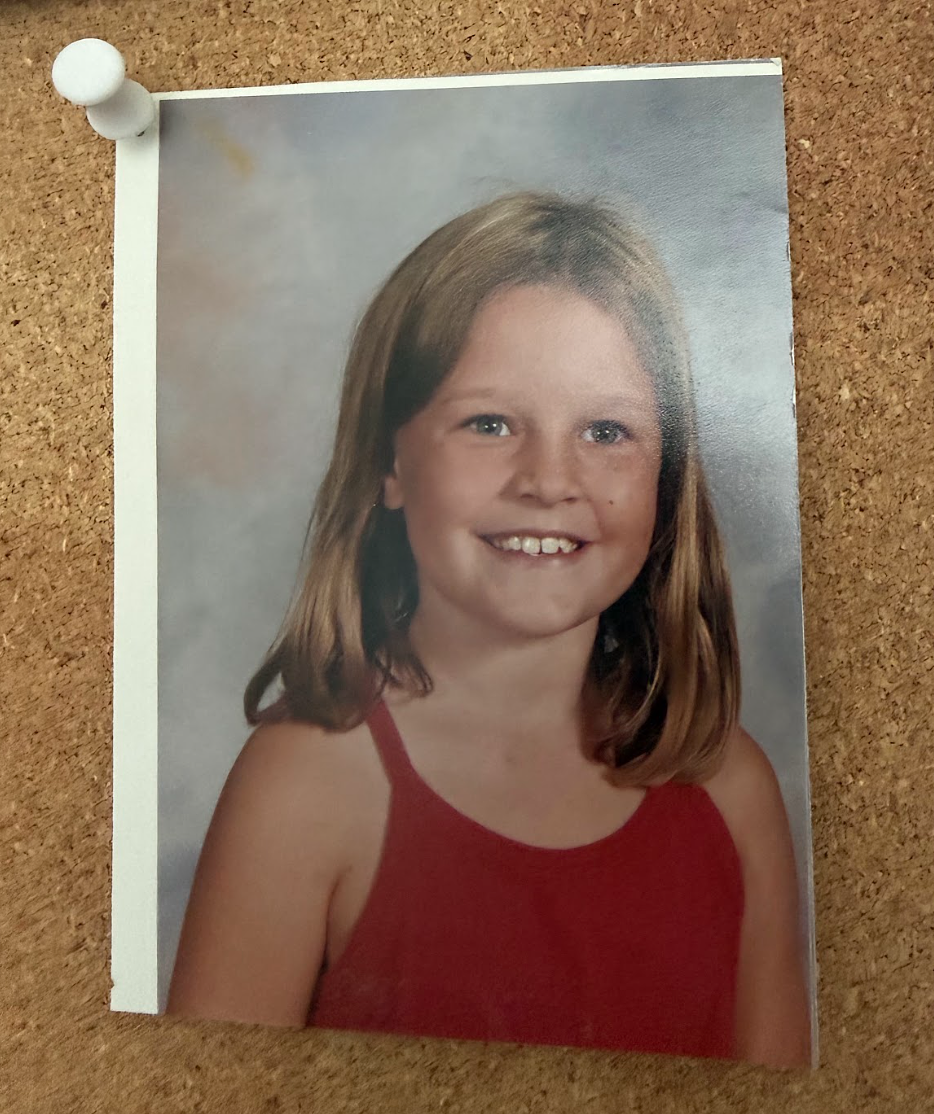
If you are a millennial, you know the joke – any criticism of our parents is met with "Okay FINE, I am the WORST mom/dad." A whole generation can relate to this, and I think that is very telling. Our parents meet these conversations with defensiveness or complete ignorance: "I don't remember that" or "that never happened." Any conversation worth having gets shut down immediately. It makes us question the stories we tell ourselves about our own past.
I turned thirty last year, and last month my parents announced their separation. Lately I have been looking back and noticing new themes, new patterns.
Anyone’s childhood is hard to remember or imagine, in general. Especially when we are really young, who’s to say we remember the lived story or if it was just told to us over and over again by other people. I have a pretty great memory of my life, especially compared to many others I know. I remember the best birthday party ever, a surprise party - all my friends in my bedroom jumping out to say “surprise!” while we piled in the car to go to Red Robin. I remember a plate being hung among others in my childhood home, while my sisters and I were running around the house and one fell off and broke. I remember my dad screaming at us about it, and I remember my sisters' red faces sobbing, inconsolable. I cannot possibly know what I don't remember, but I know what my memories feel like. And I trust that feeling more than anything else.
I did feel like a tough kid. I was in sports a lot growing up, I made friends, I got good grades. In high school, I knew I felt sadder than the other kids. I also knew I was angsty and eager to get out of my hometown, a hometown ninety-five percent of my classmates would stay in forever. I knew anxiety, failing my drivers test three times while the instructor yelled at me for not reading the car's owner manual. I knew competition, being the last one on the court in the state finals, your team already done, everyone watching, the trophy within our reach. I never went to bed hungry. I had a Christmas list for my mom every year. I felt loved. I felt…everything. And I had no idea yet how much of that story I was editing as I went.
I started revisiting my childhood when my partner and I met. She was also raised in the midwest: competitive sports, self-made father who worked constantly, never went without. On paper we looked the same, so I assumed we were.
But the more we got to know each other, the more our two childhoods diverged. Her dad was never around because of work, but when he was, he was the best, making her laugh, adding levity. My experience was the exact opposite when my dad came around. Her family had a healthy relationship with competition. Mine was more…intense. I started noticing that things I assumed every family experienced were not so normal, whatever that means. And once I saw it, I could not unsee it.
Look, it is not my first time sitting on the couch in my therapist's office examining why I am the way I am, blah blah blah. Everything comes back to childhood whether we want to go there or not. I think that is why many people do not want to start therapy, they do not want to go back there, they do not want to relive anything painful, they do not want to learn new info or see their family differently. Or see themselves differently. It is a huge undertaking all the while life keeps life-ing.
I had already done the work on the big, objectively bad stuff, the acts I could explain away as my parents just being human. What I was only now uncovering were the quieter acts, the ones hiding in plain sight. More insidious, more frequent, and somehow harder to reckon with… patterns I could not keep filing away under "everyone makes mistakes." But I did not think it affected me like that and definitely did not inform my current worldview (lol). Behaviors that my partner could not relate to. I started to get clear on the so-called rights and wrongs of my parents. Things that showed up in me because of them, that I was not sure I liked about myself. I would tell stories to my partner and laugh while she looked at me with quiet shock, gently telling me, hey, that was not normal. I would shrug it off. So many people had it so much worse. My stuff was fine.
Maybe that is the thing about turning thirty while your parents are separating. The story you thought was complete, whole, finished, was still getting revised with or without my knowing. Their chapter is closing and reopening at the same time, and somehow that has given me permission to do the same with mine.
I spent a long time being a very convincing narrator of my own childhood. I had the evidence: the birthday party, the sports trophies, the christmas lists. And all of that was true. But I was also leaving things out, the way unreliable narrators do. Not lying exactly. Just...editing. Protecting something. Maybe protecting them, maybe protecting myself.
Thirty feels like the age where the editing gets harder to justify. Where someone looks at you with gentle shock and says that was not okay, and instead of shrugging, you sit with it for a second. Where you start to wonder what else you narrated your way around.
I just keep thinking about little Steph, so young and so impressionable. I look back at her and I want to scoop her up. I want to take her home and for the first time, I think I know where that is.
I am not trying to rewrite my childhood into something it wasn't. I am just trying to finally read it more honestly. And I think that is the whole point of the work; not to arrive at a verdict on your parents or your past, but to become someone who can tell the story a little truer each time. Someone little Steph would recognize. Someone she would love.