The new pressure to be thin doesn't come with a prescription
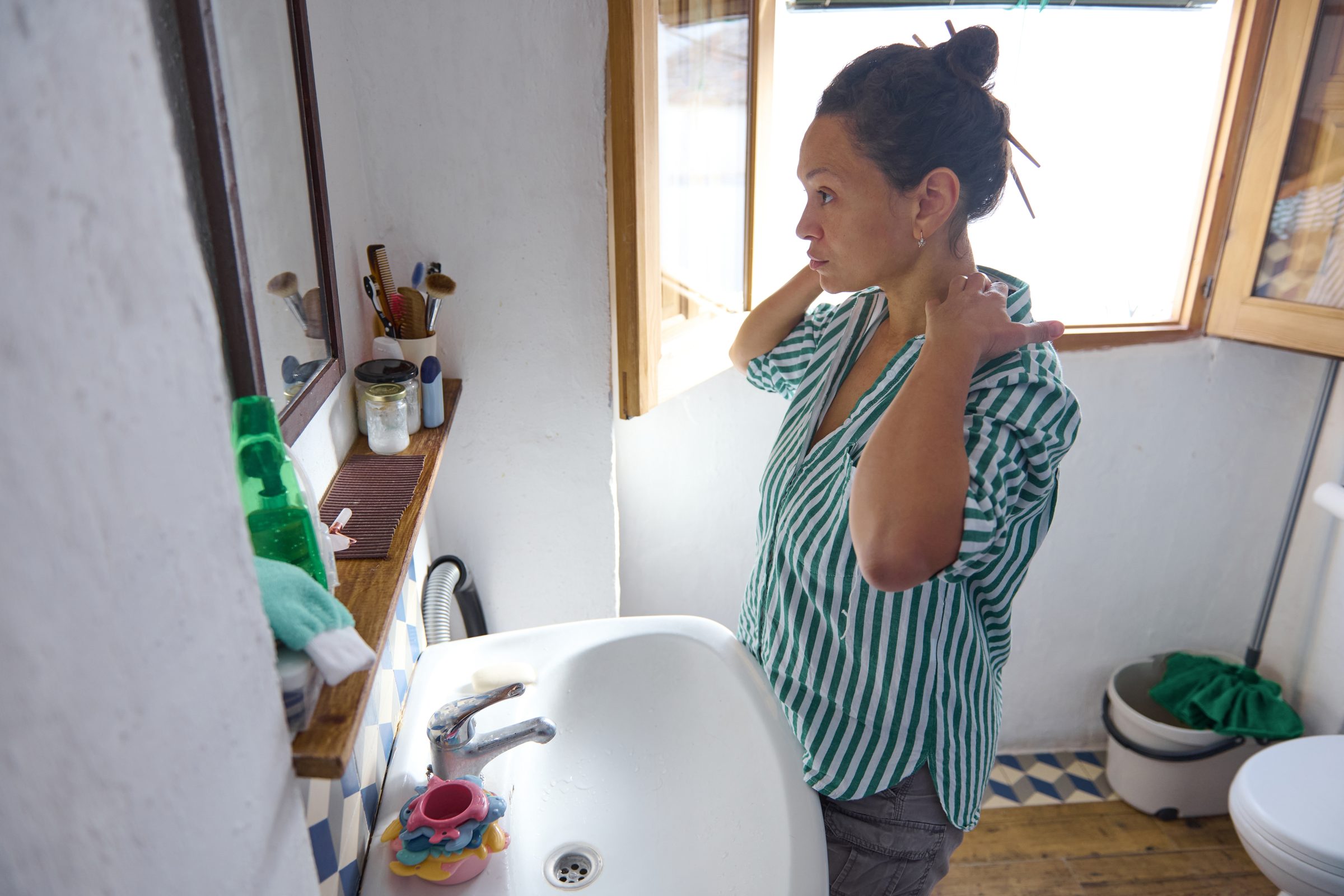
It shows up sideways. A coworker who's "down twenty" and won't say how. A face in your feed that looks a little smaller every month. An aunt at dinner who asks, casually, whether you've "looked into those shots." Nobody handed you a prescription, but somewhere in the last couple of years a question moved in and started paying rent: should I be smaller too?
If you've felt that, you're not vain and you're not imagining it. The conversation about bodies changed fast, and a lot of people, women especially, are carrying it quietly.
First, what this isn't
GLP-1 medications like semaglutide and tirzepatide are real medicine. They were developed to treat type 2 diabetes, they're approved for weight management, and for plenty of people they've been a real turning point for their health. Whether one is right for you is a conversation for you and your doctor, and nothing on this page is medical advice about that.
This piece is about something else: the culture that's grown up around the drugs, and what it's doing to how people feel in their own bodies, whether they take one, are thinking about it, or never will.
What changed
For a long time, thinness at least looked like it took effort. The drugs changed the math. When shrinking starts to look like a prescription away, staying the size you are can start to feel like a choice you have to defend. Body image researchers writing in the journal Body Image this year pointed to exactly that risk: making drug-based weight loss the norm could deepen weight stigma, by casting larger bodies as people who just haven't bothered.
The same researchers noted something people on the medications sometimes find out the hard way. Losing weight doesn't reliably fix how you feel about your body. For some people the old dissatisfaction just changes shape, into fear of regaining, or fixation on new details in the mirror. The body moved. The voice in your head didn't necessarily move with it.
If food and your body already have a history
One group needs extra care here. For anyone with a history of restrictive eating, a drug that quiets appetite can make old patterns easier to slip back into and harder to spot, from the inside and the outside. Researchers have called for screening for eating disorder history before treatment starts. If that's part of your story, it belongs in the conversation with whoever's prescribing, and it's a good reason to have a therapist in your corner too.
Signs the pressure is getting in
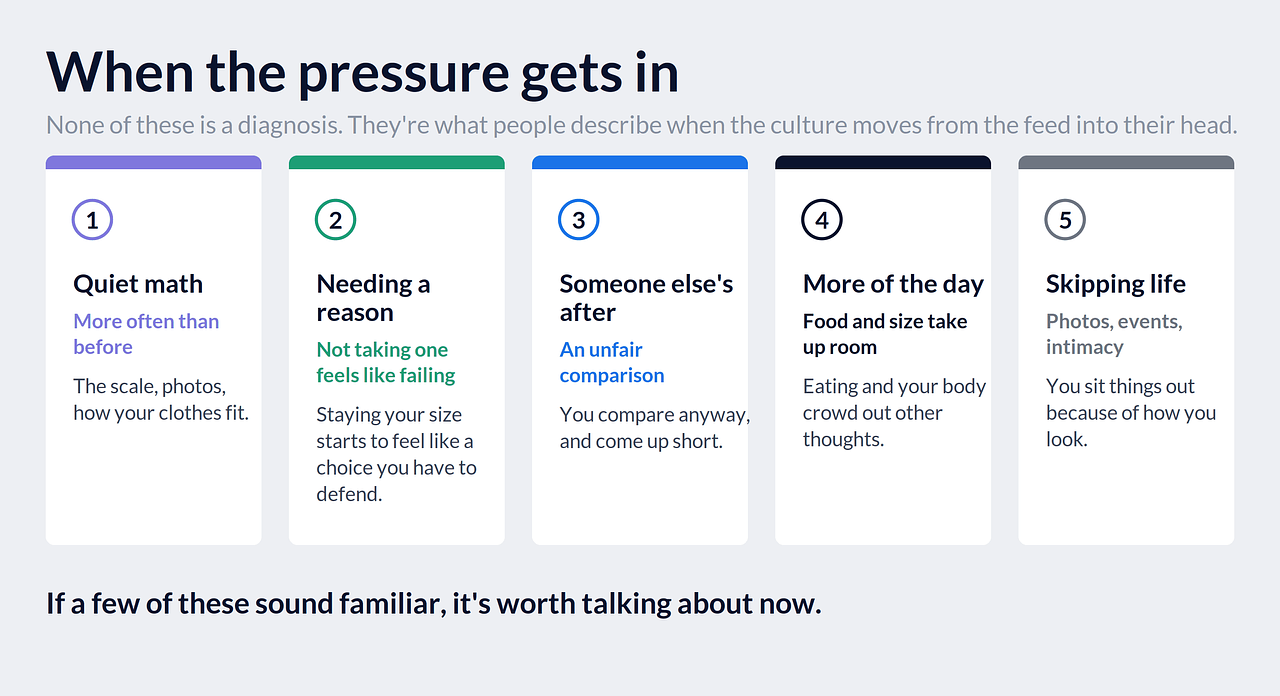
None of these is a diagnosis. They're the things people tend to describe when the culture has moved from their feed into their head:
- You're running quiet math about your body more often than you used to: the scale, photos, how your clothes fit.
- Not taking a GLP-1 has started to feel like a personal failing, or something you need a reason for.
- You measure yourself against other people's "after" and come up short, even when you know the comparison is unfair.
- Thoughts about food, eating, and your size take up more of the day than they used to.
- You're skipping photos, events, or intimacy because of how you look.
If some of that sounds familiar, it's worth talking about with someone, and you don't have to wait until it gets worse to do it.
What therapy can actually do here
Body image work in therapy usually isn't about talking you into loving every inch of yourself. That's a big ask, and plenty of people find it rings false. It's more modest and more useful than that: loosening the grip, so your body stops being the main project of your life and goes back to being the place you live.
In practice that can look like catching the comparisons as they happen and choosing not to follow them all the way down. Getting curious about where your rules came from: family, a sport, a comment at twelve that stuck. Rebuilding a relationship with food that runs on hunger and enjoyment instead of rules. Some therapists work from a weight-neutral approach, focusing on how you feel and what you do rather than the number on the scale. And if you're taking a GLP-1, a therapist who understands body image can help you through the changes, including the ones nobody warns you about.
Fit matters more than usual here. You want someone who has spent real clinical time with body image and eating concerns, and who doesn't bring their own diet talk into the room. Asking a therapist on a first call how they think about weight is a completely fair question.
You don't have to sort this out alone
People are already talking about this in the saymore community, including members working through how the GLP-1 moment makes them feel. You can read, post, or comment anonymously. Sometimes knowing other people feel it too is the first thing that helps.
A note on this page